
4 ways to improve your course content

A good course is rarely “finished for good”. The audience shifts, topics date, and what held attention a year ago is now something students skip past. Improving content doesn’t mean rewriting everything — more often it’s the habit of looking at the course through a student’s eyes and reinforcing the weak spots.
Before changing anything, it helps to know what to improve. Simple signals point the way: where students stop, where they ask the most questions, what they mention in reviews, which assignments they do eagerly and which they abandon. Once the picture is clear, get to work. If you want to dig deeper into holding attention, see our guide on engaging courses. Below are four ways that work in any niche.
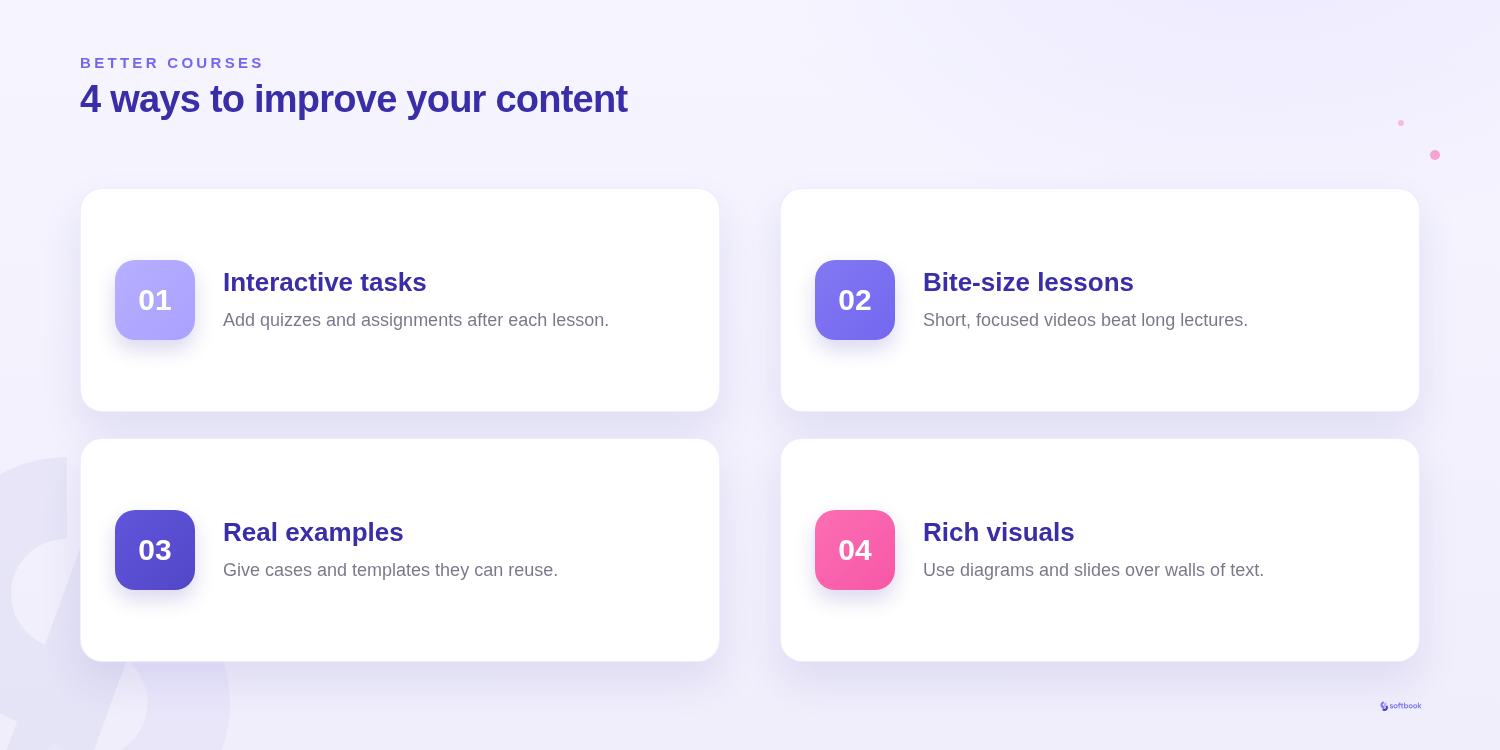
1. Vary your delivery formats
People take in information differently: some remember best from video, some from text, some when they do something themselves. If the whole course is hour-long video lectures, part of the audience burns out by the third lesson. Mix formats: a short video, a text summary, audio for listening on the go, an infographic for a complex idea, a practical task after the theory. The same material delivered two ways sticks better — and lets the student pick what suits them.
How it works in Softbook. A lesson is built from different content types in one editor: video, text, images, files. You can attach downloadable materials to each lesson, and keep reference content outside the course in a separate knowledge base section, so lessons don’t get overloaded.
2. Add knowledge checks and interaction
A recorded course easily turns passive: the student watches, nods and retains nothing. Interaction brings them back into the work. Short quizzes after a lesson, assignments with a practical result, self-check questions — all of this turns watching into learning. The check should be more than a formality; it should help the student see what they understood and what to revisit.
How it works in Softbook. Use tests and assessments in Softbook to check what students understand, then use assignments for practical work. Choose a question format that fits the skill and review the wording and correct answers before publishing. Assess student submissions against clear criteria and give feedback on what to improve.
3. Look after structure and rhythm
Even strong material loses its force when the course falls apart: it’s unclear where to start, lessons open at random, the next step is unknown. A logical structure and a managed rhythm keep students moving. Break the program into clear modules, open lessons in order, give the student a sense of progress. Live cohorts benefit from groups and schedules; recorded courses, from gradual access.
How it works in Softbook. Lesson access is managed by a schedule: the next lesson can open when a student starts or finishes the previous one. Students can be run in groups. And to see the course from the other side, there’s a “through the student’s eyes” mode — you view the account exactly as a learner does and catch the rough edges before anyone complains about them.
4. Update the course regularly — based on feedback
Content stays alive only while it’s watched over. Build the habit of reviewing the course each period: what’s changed in the topic, which questions recur, which examples have dated. Small regular updates cost less effort than a rare full rewrite and keep the course current. And always tell students about changes — it shows the course is alive.
In Softbook, AI helps prepare a course structure and rough notes for lessons. Refine the draft in the editor, check the facts and add your own examples, tests and assignments. The author remains responsible for the content and assessment criteria.
Improving content isn’t a one-off project — it’s a habit. Look at the course through a student’s eyes, vary the formats, let them check their knowledge, hold the structure and update the material while the topic lives. That regularity is what separates a course people can’t put down from one that slowly loses its audience.
Ready to make your courses stronger? Try Softbook free — 30 days of full access, cancel anytime.
Frequently asked questions
How do I make lessons more interesting?
Vary the formats (video, text, audio, infographics, practice) and add interaction after the theory. The same material delivered two ways sticks better.
Which knowledge-check formats should I use?
Use short quizzes to check understanding and assignments for practical work. Choose the question format for the skill you want to assess, review the wording and correct answers before publishing, and give feedback against clear criteria.
How do I hold a student's attention?
A logical structure, a managed rhythm and a sense of progress. Open lessons in order, run students in groups, review the course in the through the student's eyes mode.
Does AI help improve content?
Yes. In Softbook, AI helps prepare a course structure and rough notes for lessons. Refine the draft in the editor, check the facts and add your own examples, tests and assignments. The author remains responsible for the content and assessment criteria.
How do I update old courses?
Regularly and selectively: see where students stop and what recurs in their questions, and refresh examples. Dynamic templates let you change the structure without rebuilding it by hand.