
Chatbots and Messengers for an Online School: A Guide

An email can go unopened for three days. A message in a messenger is read within minutes. So for an online school, messengers aren’t “just another channel” but often the shortest path to a student — right where they already spend their day. Let’s break down why a school needs chatbots and messengers, what’s worth automating, and where to stop so a useful channel doesn’t turn into spam.
Why a school needs messengers and bots
A messenger covers two jobs at once: fast communication and automating routine. A student asks a question and gets an answer where it’s convenient, without switching to email or the account. And the typical, repeating actions — welcome them after sign-up, remind about a lesson, answer a frequent question — are handled by a bot.
A chatbot isn’t “a live person replaced by a robot”. It’s automating the predictable: the bot handles what repeats hundreds of times the same way, and frees you for the conversations where you’re really needed.
What to automate in Telegram
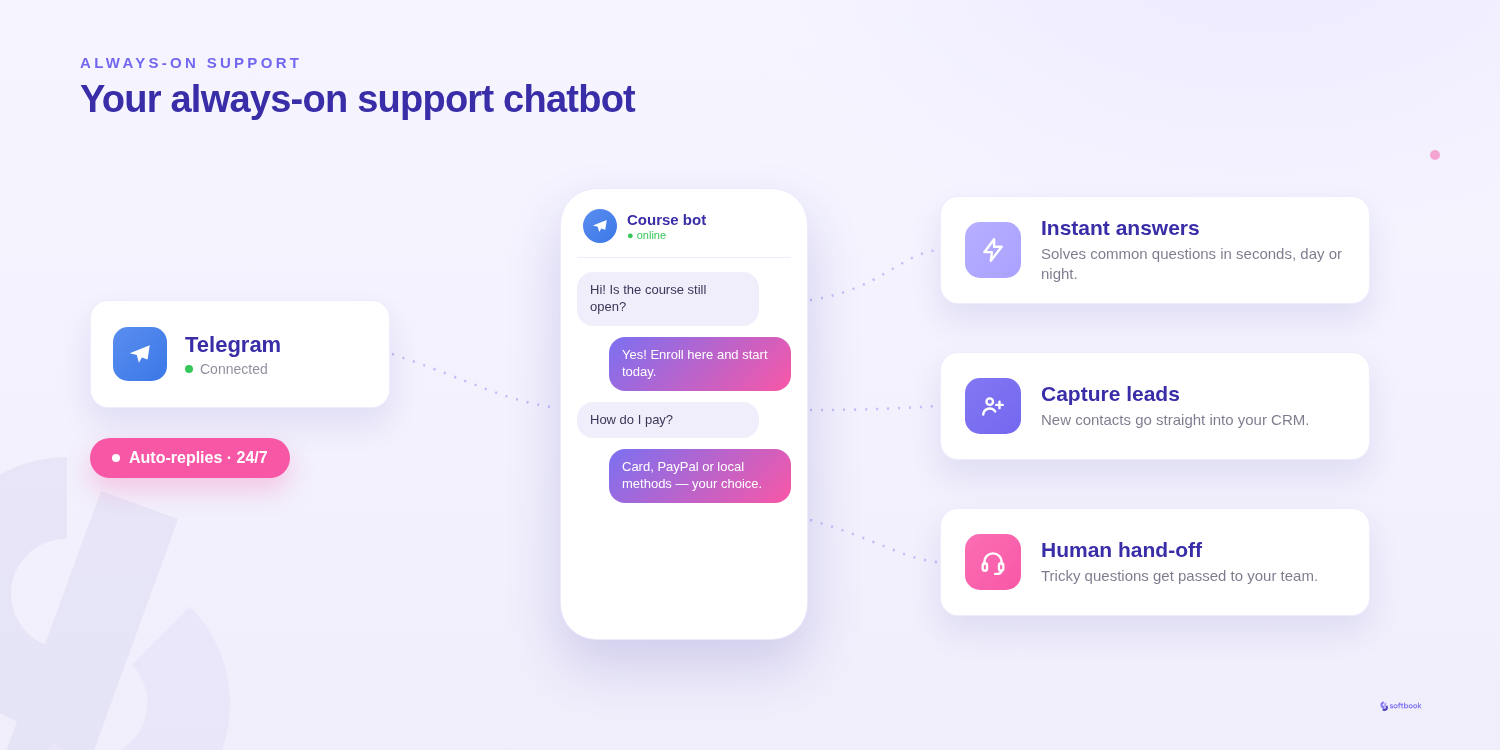
Not everything — just the repeating parts. The most useful: a welcome message after sign-up with first steps; reminders about a cohort start, a webinar or an assignment deadline; answers to frequent questions (how to log in, where the materials are, when the next lesson is); a nurture before a launch with useful content; messages about payment and access. All of these are event-driven actions, not manual broadcasts each time.
Messenger or email — which to choose
Not either/or, but different jobs. Email handles long letters, structured materials and things a student comes back to (the program, details, a big instruction). A messenger wins where speed and a short format matter: a reminder, a quick answer, a hot announcement. Strong schools combine the two: long nurtures and important documents by email, short reminders and quick questions in the messenger.
How not to spam
A messenger is personal space, and overuse is punished fast — with unsubscribes and irritation. A few rules keep the channel useful. Write when there’s a reason, not on a “we haven’t written in a while” schedule. Every message should carry value or a needed action, not just remind people you exist. Make it easy to opt out. And segment: a message about course A isn’t needed by those who already took it. It also helps to have sales funnels where the messenger is one of the steps. A useful bot reads the moment; a pushy one hits everyone the same way.
How it works in Softbook
In Softbook, messengers and bots don’t need to be wired to the course through third-party services — they run on the same student base. Telegram chatbots automate welcomes, reminders and answers to typical questions based on events in the school. Telegram campaigns go out with interactive buttons, so the student acts right inside the message — follows a link, confirms, chooses, without leaving the chat. And inside the school there’s a built-in messenger: reply to a specific message, react, pin — close to the apps people already use. The school feed and student profiles add live communication next to the learning. Since everything runs on one base, the bot relies on real data: who bought what, which lesson they stopped at, which segment they’re in.
A school needs messengers and chatbots not to “be on trend” but to talk to a student where they already are and to take routine off your plate. Automate the repeating parts, keep the short format for the messenger and the long one for email, segment, and write when there’s a reason. Then the bot works for trust, not against it.
Want to connect messengers to your school? Try Softbook free — 30 days of full access, cancel anytime.
Frequently asked questions
Why does an online school need bots?
To automate the repeating parts (welcomes, reminders, answers to frequent questions) and to talk to a student quickly where they already are. A bot frees you for the conversations where you're really needed.
What should I automate in Telegram?
A welcome after sign-up, reminders about a lesson or deadline, answers to frequent questions, a nurture before a launch, payment messages. Event-driven actions, not manual broadcasts.
How do I avoid spamming in a messenger?
Write when there's a reason, give value in every message, allow easy opt-out and segment the base. A useful bot reads the moment; a pushy one writes to everyone the same.
Messenger or email?
Different jobs: email for long letters and materials people return to; a messenger for quick reminders and short announcements. Strong schools combine both.
How do I start with bots?
Start with one scenario — say, a welcome and first steps after sign-up. In Softbook, Telegram bots and campaigns run on the same student base as the courses.