
How to sell courses online?

 To sell courses online, you need to fulfill three main points: study the target audience, create courses, and post them on the most convenient resource. Only then can you look for ways to sell them. This article will be useful both for those who already have a ready-made course and for those who are used to preparing in advance and want to calculate all the steps – from launching a course to promoting and selling it.
How profitable is it to sell online courses?
Course revenue depends on how many students pay and what you charge. Profit also depends on the cost of production, marketing, software and student support. Start with a budget and a specific audience need. A popular topic alone does not establish demand for your course.
Before launching, talk to prospective students and test a clear course offer. Review the time, skills and budget needed to deliver it.
Developing and preparing online courses for sale
Start with your area of expertise and the people you want to teach. Identify a problem they need to solve and a result your course can help them work toward.
People usually buy online courses for several reasons:
- to gain knowledge to build a career
- to improve their skills
- to get a certificate/diploma
- to learn new knowledge or skills
Before creating a course, check interest in the topic. Review relevant search queries, questions from your audience and existing offers. Ask your audience directly or run a free introductory event.
Use what you learn to define the course outcome. List what students should be able to do after training, then build the program around those skills. Choose a synchronous, asynchronous or mixed format. Prepare the structure and learning materials, record any video lessons, and decide how to price and sell the course.
Learn more about each stage of development in our checklist “How to launch an online course in 10 steps”.
Places to sell online courses
When the course is ready, you need to decide where to place it for sale. There are three most common places to sell online courses:
- LMS
- website
- marketplace
An LMS, or learning management system, provides tools for creating and delivering courses. When comparing services, check course formats, paid access, integrations, storage, support and the work required to set them up.
Consider both the software and the resources needed to run it. Some systems require technical setup and ongoing maintenance. With Softbook, you can manage learning and sell access inside your school. You can also create landing pages for your courses.
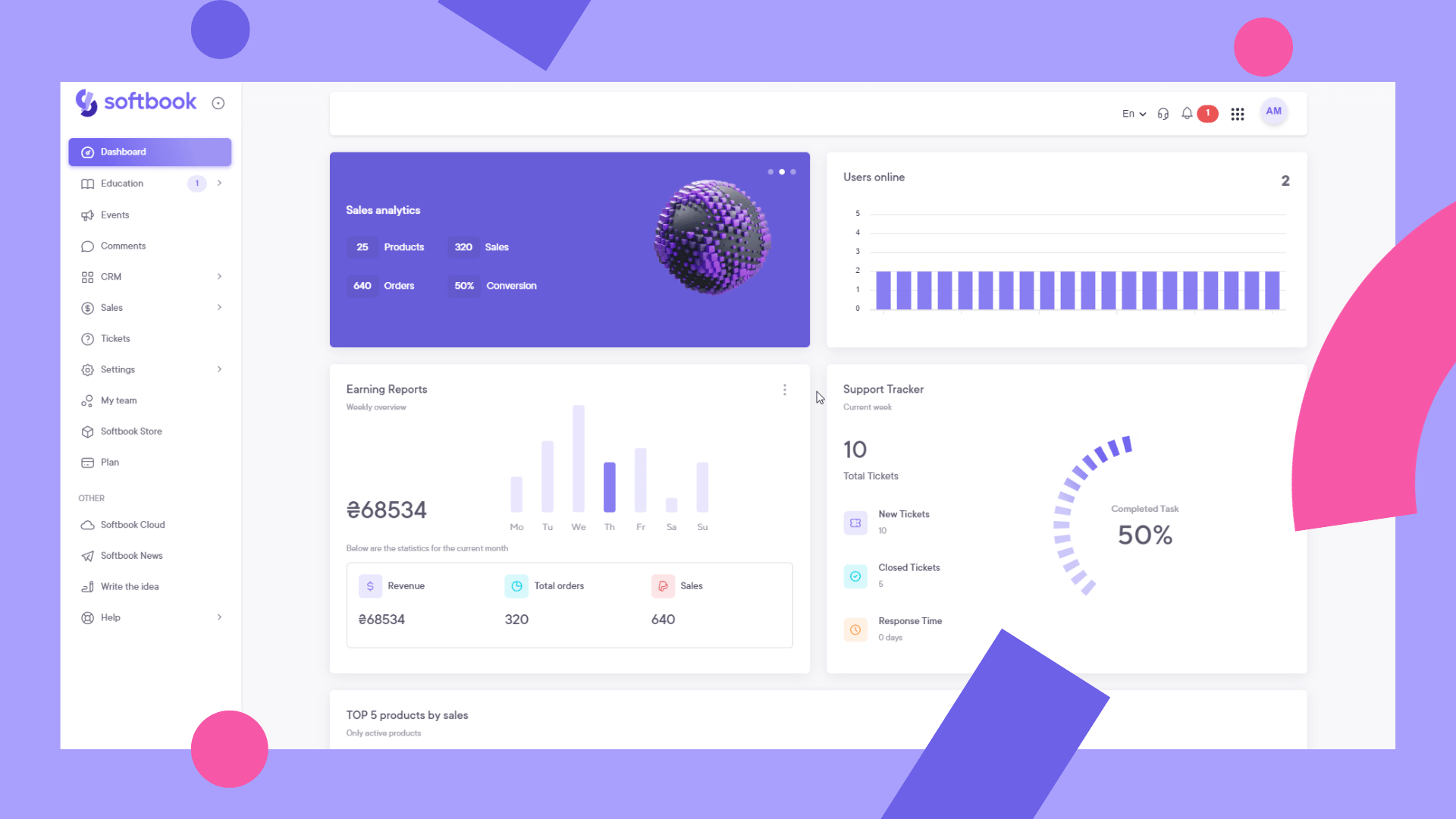
If you sell through your own website, plan how visitors will find the course, pay and receive access. You may need a domain, hosting, payment integration and technical support. Check who will maintain each part before choosing this approach.
A course marketplace has its own catalog and audience. Authors publish and sell learning products under the service’s rules. Before choosing one, check fees, control over pricing, access to buyer data and options for moving your content. An LMS for your own school and a marketplace serve different purposes: managing learning in your own space or selling through another service’s catalog.
You already know about the options for hosting your online courses. Wherever they are, to sell them, you will have to choose and apply one or more ways to attract your audience. That’s what we’re going to talk about next.
Ways to sell online courses
There are dozens of ways to sell online courses. Every year, with the advent of digital technologies, new social networks, or features in familiar social networks, there are more and more of them. But we have collected the most common and proven ones:
Website or landing page
Online courses can be sold on your school’s specialized website or on a separate landing page. The course description on them should encourage customers to purchase the course or perform any other action you have planned. When creating a course page on your website or developing a landing page, you should consider important elements that can increase conversion:
- The banner of the course page should attract attention and inform customers about the benefits they will receive from the course. It should consist of a course title, headline, subheading, and a call to action that tells visitors what to do.
- Course description. It should give the prospective student a complete picture of what they will learn, what the program looks like, and how they will be able to use the skills they have acquired.
- information about the teacher. Add a photo and a brief description of the teacher’s specialization, area of expertise, and achievements. Clients like to see what kind of pro they will be learning from.
- social proof blocks. A list of frequently asked questions, testimonials from graduates, a money-back guarantee – all this increases the level of customer trust and encourages them to buy.
Content marketing
Publish useful articles and resources where your audience can find them. Cover questions related to your course and add relevant links to its page. Make the content clear and easy to find through search. Review which topics bring interested readers and enquiries.
Social media
To reach a larger audience, share your useful content on social media. Create profiles where your target audience is and build relationships with them. Join communities, claim your expertise, and talk about your course. You can also find partner bloggers, order ads from influencers, and customize ads according to various parameters within the social network.
Email list
Send course emails to people who have agreed to hear from you. Segment the list by interest and link each message to the relevant course page. Explain the offer clearly. Mention a deadline only when the offer has a real closing date.
Test subject lines and messages to learn what your audience responds to. Track clicks and course purchases as well as opens.
If you are starting without a list, offer a useful resource or an introductory event that people can sign up for.
Free resources
A lead magnet is a useful free resource offered in exchange for contact details. Examples include a checklist, short guide, template, webinar or consultation. Choose something that addresses a specific audience need and relates to the paid course. Explain what people will receive and where to sign up.
Low-cost introductory products
A low-cost introductory product lets a prospective student try your approach before considering the main course. This is often called a tripwire. It can be a mini-course, guide or workshop with a useful outcome of its own. Make the scope and price clear, and explain how it relates to the full course.
Sales funnel
A sales funnel maps the steps from first contact to a possible purchase. Plan what a prospective student needs at each step: useful information, a sample, answers to questions or a clear offer. Then review where people continue and where they leave.
An online course sales funnel can look like this:
- Prospective students come to the website through social media, advertising, search queries, or referral links.
- They study the information about the course on the landing page, which contains detailed information and benefits of learning.
- Interested parties register by entering their email, phone number, and name.
- Potential students view free lessons or samples to assess whether the course meets their needs.
- Then they can participate in webinars or online events where they get more information and the opportunity to ask questions.
- They receive additional materials to help them make a decision, such as feedback from other students, answers to questions, consultations, and special offers.
- After reviewing the offer, an interested person may choose to buy the course.
- The customer gets access to the course materials and becomes a student after successful payment and registration.
This funnel helps you understand how your audience interacts with your product and gives you the opportunity to optimize each stage to improve conversions.
Advertising
Paid advertising can bring visitors to a course page. Define the audience, message and budget before launching a campaign. Compare the cost of enquiries and sales with your course economics.
There are several types of paid advertising:
- Search ads. It shows your potential customers an ad about your course and is thematically related to the user’s search query.
- contextual advertising. Advertising placed on resources on a topic that is relevant to the product/offer being advertised.
- advertising in social networks. Advertising aimed at a specific target audience with a clear set of characteristics and interests.
- Native advertising. An advertising format that is designed to organically fit into the context and style of the platform or resource on which it is placed. The main idea of native advertising is to look like a part of the existing content, not like a typical advertisement.
Affiliate program
A partner can promote your course using an agreed referral link or code. Define how referrals are tracked, what earns a reward and when it is paid. Softbook includes tools for creating promo codes.
Course samples and beta testers
Offer a sample lesson so prospective students can see the format and teaching approach. You can also invite a small group to test a course before release. Ask what was clear, where they struggled and what could improve. Use their feedback to revise the material.
Industry events and guest contributions
Choose events, podcasts and publications that reach the people you want to teach. Share useful expertise and explain who the course is for. Discuss relevant collaborations with other specialists, then review which activities bring interested enquiries.
Choose the methods that fit your audience, course and available resources. Start with a manageable set, review the results and adjust your approach.
Frequently asked questions
How can a creator validate an online course idea before production?
Start with the overlap between your expertise and a real audience need. Review search demand, current questions, competitors, and the reasons people buy training, then ask an existing audience directly or run a free event. Define the result students should achieve before building the curriculum, format, materials, and price.
Where can an online course be hosted and sold?
The main options are an LMS, a self-managed website, or a course marketplace. An LMS combines delivery and sales tools, a website offers more control but needs technical setup and maintenance, and a marketplace provides discovery and infrastructure while imposing platform rules and taking a share of revenue.
What should a course landing page include?
Use a clear headline, outcome-focused subheading, visible call to action, detailed program, instructor expertise, testimonials, frequently asked questions, and a trust element such as a guarantee. The page should explain who the course is for, what students will learn, how they will use the skill, and what action to take next.
How can content, social media, and email support course sales?
Publish useful topic-related content, optimize it for search, and share it where the target audience already spends time. Build relationships before promoting the course. Segment an email list by interest, test subject lines and messages, track opens and conversions, and send readers to a relevant course page rather than a generic website.
What is the difference between a lead magnet and a tripwire?
A lead magnet is a useful free resource exchanged for contact information, such as a checklist, guide, webinar, or consultation. A tripwire is a low-cost product that lets a new customer experience the creator’s value with little risk. Both can lead into a planned funnel containing samples, events, proof, offers, and the main course.